The Skeletal System
What is it? The skeletal system is the framework of bones and cartilage that gives your body shape, support, and protection. It’s what keeps you upright, lets you move, and shields important organs like your brain, heart, and lungs.
How does it function?
The skeletal system does several important jobs:
Supports your body so you can stand, sit, and move
Protects organs (your skull protects your brain, your ribs protect your heart and lungs)
Works with muscles to help you move
Stores minerals like calcium and phosphorus
Produces blood cells inside the bone marrow
Provides attachment points for muscles, ligaments, and tendons
What is the anatomy of it?
Bones — 206 in the adult body, each with its own shape and purpose
Cartilage — flexible tissue that cushions joints and supports structures like the nose and ears
Joints — where two bones meet, allowing movement
Ligaments — strong bands of tissue that connect bone to bone
Bone marrow — soft tissue inside bones that makes blood cells
Common conditions and disorders
Osteoporosis: bones become weak and break easily
Arthritis: inflammation in the joints causing pain and stiffness
Fractures: broken bones
Scoliosis: sideways curve of the spine
Osteoarthritis: wear‑and‑tear damage to joint cartilage
Sprains and strains: injuries to ligaments or muscles around joints
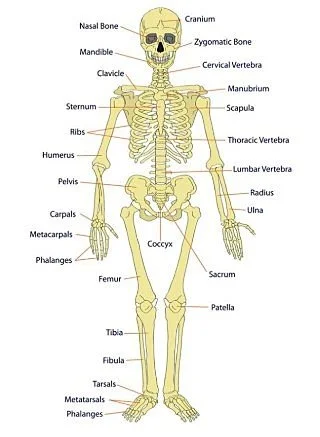
Bones come in different types:
Long bones (arms, legs)
Short bones (wrists, ankles)
Flat bones (skull, ribs)
Irregular bones (vertebrae)
How does it affect other systems?
Muscular system: muscles attach to bones to create movement
Circulatory system: bone marrow makes red and white blood cells
Nervous system: the skull and spine protect the brain and spinal cord
Endocrine system: bones store and release minerals that help regulate hormones
Immune system: bone marrow produces immune cells
When the skeletal system is healthy, it supports the health of all these systems.
How to keep it healthy
Eat foods rich in calcium (dairy, leafy greens, fortified foods)
Get enough vitamin D from sunlight or food sources
Do weight‑bearing exercises like walking, dancing, or light strength training
Practice good posture
Avoid smoking and limit exposure to harmful substances
Stay active to keep joints flexible
Drink enough water to support joint health
Get regular checkups if you have bone or joint concerns
The Circulatory System
What is it?
The circulatory system is your body’s transportation network. It moves blood, oxygen, nutrients, hormones, and waste products throughout your body so every cell gets what it needs to stay alive and healthy.
How does it function?
The circulatory system works like a constantly running delivery and cleanup service:
The heart pumps blood through your body.
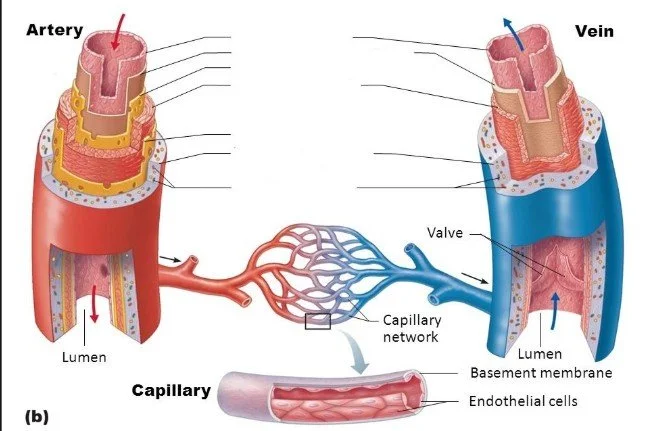
Arteries carry oxygen‑rich blood from the heart to your tissues.
Veins bring oxygen‑poor blood back to the heart.
The lungs add fresh oxygen to the blood and remove carbon dioxide.
Capillaries, tiny blood vessels, allow oxygen and nutrients to move into cells and waste to move out.
This system keeps your organs supplied with oxygen and nutrients while removing waste so your body can function smoothly.
How does it affect other systems?
The circulatory system supports nearly every other system:
Respiratory system: works with the lungs to exchange oxygen and carbon dioxide
Digestive system: absorbs nutrients and delivers them through the blood
Endocrine system: transports hormones to organs and tissues
Muscular system: supplies muscles with oxygen for movement
Nervous system: provides the brain with constant oxygen and glucose
Immune system: carries white blood cells to fight infections
If the circulatory system isn’t working well, other systems struggle too.
How to keep it healthy
Beginner‑friendly ways to support circulatory health:
Move your body regularly (walking counts)
Eat a balanced diet with fruits, vegetables, and whole foods
Drink enough water
Get consistent sleep
Manage stress with calming activities
Avoid smoking
Limit foods high in added sugar or unhealthy
What is the anatomy of it?
The circulatory system includes:
Heart — a strong, muscular pump with four chambers
Blood vessels —
Arteries (carry blood away from the heart)
Veins (carry blood back to the heart)
Capillaries (tiny vessels where exchange happens)
Blood — made of red blood cells, white blood cells, platelets, and plasma
Together, these parts form a closed loop that circulates blood nonstop.
Common conditions and disorders
High blood pressure (hypertension)
Heart disease
Atherosclerosis (narrowed arteries)
Stroke
Heart attack
Arrhythmias (irregular heartbeat)
Anemia (low red blood cells)
Varicose veins
These conditions can range from mild to serious, depending on how they affect blood flow.
The Endocrine System
What is it?
The endocrine system is your body’s hormone‑producing network. Hormones are chemical messengers that travel through your blood and help control growth, metabolism, mood, energy, and many other daily functions. This system keeps your body balanced and helps it respond to changes.
How does it function?
The endocrine system works by releasing hormones into the bloodstream. These hormones:
· Tell organs what to do and when
· Help regulate metabolism and energy levels
· Control growth and development
· Support reproduction
· Help manage stress
· Keep your internal environment stable (homeostasis)
The system works slowly and steadily, sending long‑lasting signals that guide your body’s overall function.
How does it affect other systems?
The endocrine system influences nearly every system in the body:
· Nervous system: works closely with the brain to control stress, mood, and responses
· Circulatory system: uses the bloodstream to deliver hormones
· Digestive system: hormones help regulate appetite and blood sugar
· Reproductive system: controls menstrual cycles, fertility, and development
· Skeletal system: hormones help manage bone growth and calcium levels
· Muscular system: hormones affect strength, energy, and repair
When hormones are balanced, all these systems work smoothly.
Common conditions and disorders
· Hypothyroidism: thyroid doesn’t make enough hormones
· Hyperthyroidism: thyroid makes too much hormone
· Diabetes: pancreas has trouble managing blood sugar
· PCOS (polycystic ovary syndrome): affects reproductive hormones
· Adrenal disorders: problems with stress‑related hormones
· Growth disorders: too much or too little growth hormone
These conditions often involve hormone imbalances that affect energy, mood, or metabolism.
What is the anatomy of it?
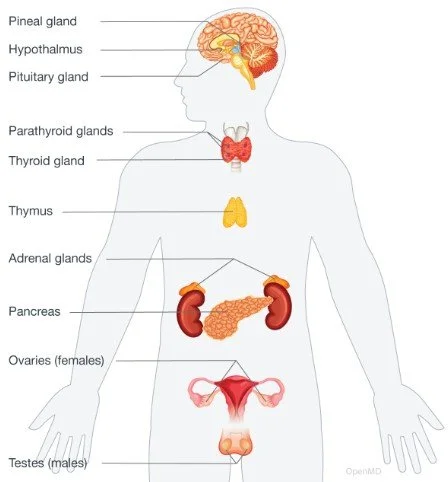
The endocrine system is made up of glands and organs that produce hormones. Key parts include:
· Pituitary gland — the “master gland” that controls many others
· Thyroid gland — regulates metabolism and energy
· Parathyroid glands — control calcium levels
· Adrenal glands — help manage stress and blood pressure
· Pancreas — helps regulate blood sugar
· Pineal gland — helps control sleep cycles
· Ovaries/Testes — produce reproductive hormones
Each gland releases specific hormones that affect different parts of the body.
How to keep it healthy
Beginner‑friendly ways to support endocrine health:
· Eat a balanced diet with whole foods
· Get regular movement to support hormone balance
· Aim for consistent, good‑quality sleep
· Manage stress with calming activities
· Avoid smoking and limit harmful exposures
· Stay hydrated
· Get enough iodine, selenium, and other essential nutrients
· Keep up with routine checkups if you have hormone concerns
These habits help keep your hormones steady and your body functioning well.
The Muscular System
What is it?
The muscular system is the group of muscles in your body that help you move, maintain posture, and support essential functions like breathing and digestion. It’s what allows you to walk, smile, lift, speak, and even keep your heart beating.
How does it function?
Your muscles work by contracting (tightening) and relaxing. When a muscle contracts, it pulls on bones or tissues to create movement. The nervous system sends signals that tell muscles when to move, how strongly to contract, and when to rest.
Muscles also:
Help maintain body temperature by producing heat
Support joints and stabilize your body
Move food through your digestive system
Pump blood through your heart
How does it affect other systems?
The muscular system works closely with many other systems:
Skeletal system: muscles pull on bones to create movement
Nervous system: sends signals that control muscle actions
Circulatory system: the heart (a muscle) pumps blood
Digestive system: smooth muscles move food along
Respiratory system: muscles like the diaphragm help you breathe
Endocrine system: hormones influence muscle growth and energy use
Healthy muscles help keep the whole body functioning smoothly.
Common conditions and disorders
Strains: overstretched or torn muscles
Tendonitis: inflammation of a tendon
Muscle cramps: sudden, painful tightening
Muscular dystrophy: genetic conditions that weaken muscles
Myasthenia gravis: affects communication between nerves and muscles
Sprains: injuries to ligaments around joints (often linked with muscle injuries)
These conditions can affect movement, strength, and daily activities.
What is the anatomy of it?
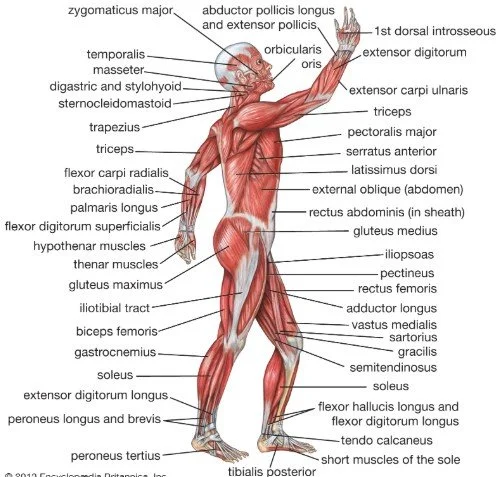
The muscular system includes three main types of muscles:
Skeletal muscles — attached to bones; allow voluntary movement like walking or lifting
Smooth muscles — found in organs like the stomach, intestines, and blood vessels; work automatically
Cardiac muscle — found only in the heart; pumps blood continuously
Other important parts include:
Tendons — tough cords that connect muscles to bones
Fascia — connective tissue that surrounds and supports muscles
There are over 600 muscles in the human body, each with a specific job.
How to keep it healthy
Beginner‑friendly ways to support muscular health:
Move your body regularly (walking, stretching, light strength work)
Eat enough protein to support muscle repair
Stay hydrated
Warm up before activity and cool down afterward
Get consistent sleep to help muscles recover
Maintain good posture
Avoid smoking
Take breaks from long periods of sitting
These habits help keep your muscles strong, flexible, and functioning well.
The Respiratory System
What is it?
The respiratory system is the group of organs that help you breathe. Its main job is to bring oxygen into your body and remove carbon dioxide, a waste gas your body doesn’t need. Breathing keeps your cells alive and your body functioning.
How does it function?
The respiratory system works through a simple cycle:
You inhale, pulling air into your lungs.
Oxygen from the air moves into your bloodstream.
Your blood carries that oxygen to every cell in your body.
Cells use oxygen and produce carbon dioxide as waste.
You exhale, releasing carbon dioxide out of your body.
Muscles like the diaphragm help your lungs expand and relax so air can move in and out smoothly.